Overcoming Language Barriers in Global Remote Teams
By the Speaking Genie Corporate Team | 7 min read
Key Takeaways
- Language barriers in remote teams lead to siloed departments, duplicated work, and decreased employee morale.
- Relying solely on translation software slows down real-time collaboration and creates a disconnect in company culture.
- Fostering a culture of asynchronous communication helps non-native speakers process information without the pressure of live meetings.
- Providing scalable, AI-driven conversational language training offers a long-term Return on Investment (ROI) by permanently removing the communication bottleneck.
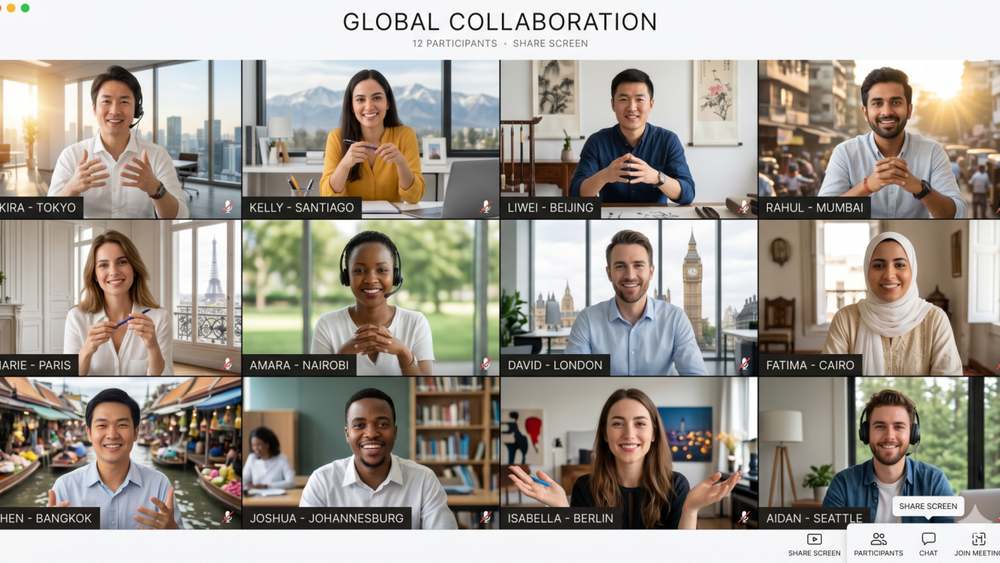
The transition to remote work has allowed companies to hire the best talent regardless of geography. It is now entirely common for a single project squad to consist of a product manager in London, developers in Brazil, and marketing specialists in Japan.
However, this globalized talent pool comes with a distinct challenge: the communication bottleneck. When the primary corporate language (usually English) is not the native language of the entire team, friction occurs. Projects stall, brilliant ideas go unshared, and team cohesion fractures. Here is how leading multinational companies are actively overcoming language barriers in their remote teams.
The Cost of the "Zoom Freeze"
In our previous articles, we discussed the speaking freeze—the psychological panic that occurs when a language learner is forced to speak in real-time. In a corporate setting, this often manifests as the "Zoom Freeze."
When non-native speakers are invited to a fast-paced, 15-person video conference, they often stay completely silent. They might have the solution to the problem being discussed, but the fear of mispronouncing a word or disrupting the flow of native speakers keeps them muted. This lack of participation isn't a sign of incompetence; it is a sign of language anxiety. And it costs your company its best ideas.
3 Strategies to Bridge the Language Gap
Overcoming these barriers requires a mix of immediate operational shifts and long-term skill development. Here are three strategies to implement immediately:
1. Embrace Asynchronous Communication
Live meetings are the hardest environment for non-native speakers because they require instant translation and response. By moving project updates and brainstorming sessions to asynchronous channels (like Slack, Microsoft Teams, or recorded Loom videos), you give employees the time they need.
When an employee can read a brief, formulate their thoughts, and reply on their own time, the pressure is off. They can communicate their expertise clearly without the stress of a ticking clock.
2. Standardize "Global" English
Native speakers are often the biggest culprits of communication breakdowns. They use heavy slang, regional idioms (e.g., "Let's touch base and hit a home run"), and speak far too quickly. HR and management must train native speakers to use "Global English"—clear, jargon-free language that prioritizes simplicity and intelligibility over stylistic flair.
Empower Your Remote Workforce
Give your global teams the confidence to speak up in every meeting. Provide them with unlimited conversational practice via Speaking Genie.
Explore Corporate Solutions3. Invest in Conversational AI Training
Operational shifts are helpful, but they only treat the symptoms. To cure the disease of the language barrier, you must upskill your workforce.
Traditional corporate language classes don't work for remote teams spread across five different time zones. Instead, modern enterprises are turning to AI-driven language platforms.
By giving your remote employees access to an AI language coach like Speaking Genie, they can practice role-playing specific corporate scenarios (like giving a project update or defending a budget) in a private, judgment-free environment. This daily, micro-practice builds the neuro-confidence they need to unmute their microphones and speak up during the next global Zoom call.
Measuring the Impact of Unified Communication
When you remove language barriers, the impact is immediately visible across the organization. Meetings become shorter and more productive. Error rates on technical tasks drop because instructions are clearly understood the first time. Most importantly, employee morale improves.
When an employee feels confident that their voice is heard and understood by their global peers, they feel like a true part of the company culture. And in a remote-first world, a unified company culture is your ultimate competitive advantage.
Break Down Corporate Language Barriers
Stop letting communication bottlenecks slow down your global growth. Discover how Speaking Genie's B2B platform creates fluent, unified remote teams.
Request an Enterprise DemoMonitor employee progress with our comprehensive HR Dashboard.